
In the world of college football, new players get recruited, while others may transfer teams. Coaches come and go, championships pass, but through it all, the rivalries between teams is what stays. Some view it as friendly banter, others as a lifelong RIVALRY. At the end of the day though, it is something deeper. The competitive environment these teams generate goes beyond the scoreboard; it defines the school’s identity, values and culture to create an everlasting community. From “The Game” between the Michigan Wolverines and the Ohio State Buckeyes to the in-state rivalry between the University of Florida’s Gators and the Florida State’s Seminoles, college football rivalries have been passed down from generation to generation and are a key component of the sport as a whole.
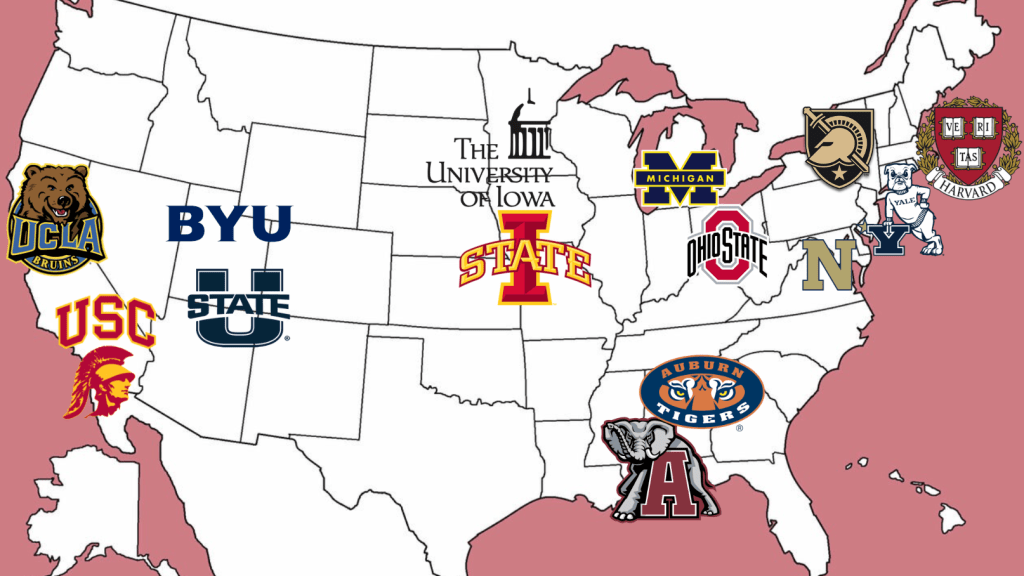
In the mid-1800s, college football began to gain traction, slowly growing its popularity as each decade passed. What started as small student-led matchups, evolved into highly anticipated games televised across the United States. Alongside the increase in viewership came a rise in heated rivalries between fans. The competition between Harvard’s Crimson and Yale’s Bulldogs is one of the oldest rivalries in college football history, dating back to 1875, when the two Ivy Leagues played their first game against each other. This rivalry is well-known due to a prank during the 2004 season where Yale students posed as Harvard fans, passing out signs for them to hold up during the game. Succeeding, they were able to get their rival’s side of the stadium to spell out “We Suck” rather than “Go Harvard” like they were expecting. To this day, these two colleges remain each other’s biggest opponent, their followers still butting heads over back and forth wins. This season, Yale came out on top with a score of 45-28, their seventh (non-consecutive) win in the past decade.
Like Yale’s prank on Harvard, supporters tend to play around with the opposing team, building up energy and anticipation before and during games. For example, before the Michigan and Ohio State game in the 2025 season, Ohio state fans decided to x out everything containing the letter “M,” a symbol of Michigan, on street signs, buildings and even books around the campus as an attempt to eliminate their rivals from their atmosphere. They took this onto social media, posting pictures of these actions and refusing to use the letter “M” in their captions to hype up the game and show Michigan that they are ready to play against them. While it might not seem like it, these interactions build a community not just of fans of one specific team, but with their competition as well, pulling lighthearted jokes on each other. However, sometimes these alleged jokes can go too far, causing serious conflict. In 2010, an Alabama fan poisoned the historic Toomer’s Corner oak trees, an important symbol representing Auburn University, seeking revenge after Alabama lost against them. This led to the supporter serving jail time, paying for restoration of the trees and no longer being respected by other fans. Also, in a world where social media predominates people’s lives and serves as a mask to hide when crossing lines, the so-called teasing has become down-right mean, mocking players, coaches and fans; creating memes of sensitive topics and simply going too far. Many see these comments as aggressive attacks and beyond what football rivalries are all about. But luckily, these types of scenarios are not typically common, with fans focusing more on rooting for their own team.
Truthfully, these rivalries bring out the best of each school’s spirit, pride and loyalty. Traditions like pep rallies and decorating the campus with the school colors and mascot for these games show how proud students are of their school, supporting it through thick and thin. They are also deeply implanted in family traditions, as students and alumni gather to watch these games with family, eventually passing down their school spirit to their children and grandchildren. This allows for younger generations to maintain their connection with the older members of the family through passion for their team and dislike towards the opponent. The atmosphere when audiences chant while their team plays against the alleged enemy is unforgettable and sure to leave a lasting impression and wonderful memories for fans. In that moment, it is more than just a silly game between rivals, it is a community, a part of who they are.
Bottomline: College football rivalries really are that serious because of the sense of community and the pride of fans’ identities they build.


 The Surge
Leave a comment